
Hello, you are using an old browser that's unsafe and no longer supported. Please consider updating your browser to a newer version, or downloading a modern browser.
Hello, you are using an old browser that's unsafe and no longer supported. Please consider updating your browser to a newer version, or downloading a modern browser.
University of California, Los Angeles
I have a long-held belief that understanding neurodevelopment will enable us to better understand and, someday, treat brain cancer. This was the primary reason why I started my lab. My paper identifying a human neurodevelopmental stem cell (outer radial glia) was published almost six years ago. Now, people are starting to pay attention to radial glia in brain tumors. In fact, I attended a meeting recently where several people who didn’t even know who I was were discussing radial glia. This progression has been awesome and surreal, and has reaffirmed my excitement to work on both development and cancer, and to let them converge organically to guide the science.
Before coming to UCLA and experiencing like-minded people such as the Sontag Foundation community, I didn’t have a solid grasp on how the science we do can tangibly impact people. By talking to clinicians regularly and by hearing about patient experiences, translational strategy, and the complexities of applying a finding in the lab to patient care, I have gained appreciation for how hard every step of the process is. This inspiration has changed how I approach the questions in my lab related to brain cancer. I think curiosity plays a huge role in science, and I believe the side of my lab where we study neurodevelopment is the right playground to explore that curiosity. Now, I want anything we do related to brain cancer to be centered around making a difference for patients, eventually.
I didn’t take a linear path to studying the brain or brain cancer. I worked in organic chemistry, epithelial cell development and cancer, and have done a lot of work in bioinformatics. I feel there’s a narrative out there that says if you don’t start working on something early you might not become an expert, but both my own experience and that of my peers has shown me that very few people take a linear approach and our science is better for it. So, I try to lean on my experiences I gained along this winding path when I am learning new things now (such as more functional neuroscience assays or immunology) and I try to use it to reassure my trainees as well.
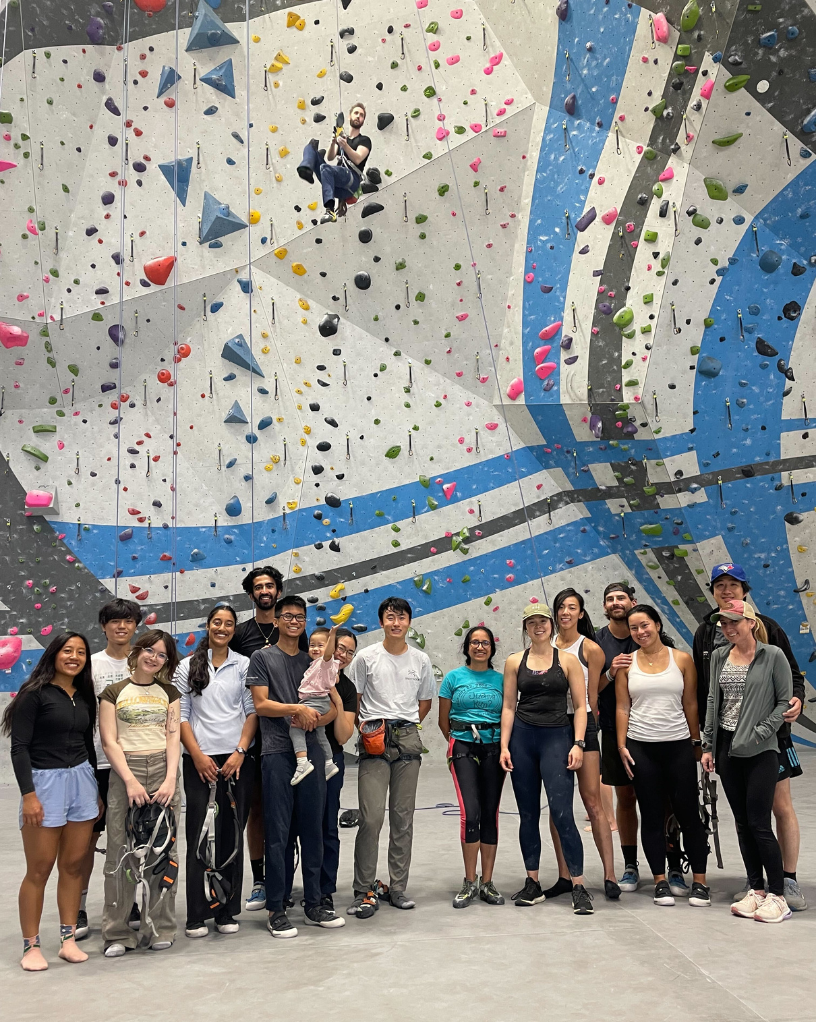
I love rock climbing! We take the members of my lab annually and it’s a great challenge and stress reliever. I am not that strong, but I am more physically capable than I look because of climbing. It’s very fun to surprise people by picking up objects they don’t think I should be able to lift. (It’s a nice side perk; and no, don’t ask me to lift something as an example.)